
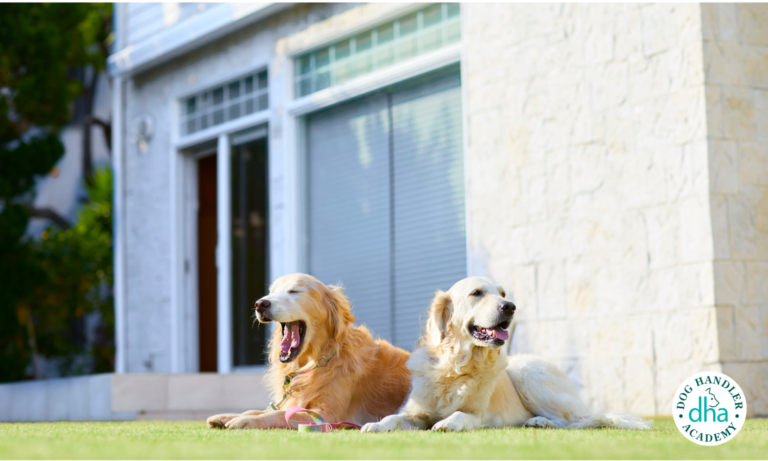
Choosing the Best Yard Surface for Your Dog Daycare
If you’ve spent any time in dog daycare owner Facebook groups, you’ve seen this debate play out. Grass versus turf versus pea gravel gets argued like a religious conversion, and everyone either swears by or complains about whatever they installed. The thing is, none of the three is right for every facility. Each one solves a problem and creates a new one, and which one makes sense for you depends on your climate, your traffic, how much yard you actually have, and how much staff time you can spare for upkeep.
Before you compare surfaces, check your square footage
This is the step most people skip, and it should come first. Industry guidance generally lands somewhere between 40 and 100 square feet per dog for off-leash play, with smaller dogs needing less and larger or more active dogs needing more. Once you know roughly what that adds up to for your own dog count, it changes how you look at all three surfaces.
For example, grass needs room to rotate, some sections resting while dogs use others, so tight square footage rules it out fast. Gravel and turf don’t have that same rotation requirement, but square footage still matters for them: less space means more dogs concentrated on the same few square feet of surface, which means more waste, more wear, and shorter intervals between cleaning and maintenance no matter what you’ve put down. A small yard on turf still needs more frequent rinsing than a large one with the same dog count spread out. A small gravel area still needs more frequent raking and leveling.
So before you get into the pros and cons below, know your number. It’ll tell you how demanding any of these three surfaces is going to be on your specific footprint.
Natural Grass
Pros: Cheapest to install by a wide margin. Feels familiar underfoot, which clients notice on a tour. Nothing synthetic to think about.
Cons: Grass doesn’t hold up well to constant traffic. Urine burns dead spots into it, paws compact the soil, and keeping it usable long term means rotating sections and letting the worn ones recover, which takes space you may not have. Throw in mud after rain and dust during a dry spell, and grass tends to be the surface owners eventually replace, not the one they keep for a decade.
Pea Gravel and Crushed Stone
Pros: Drains well since water and urine pass right through instead of pooling. Cheaper material cost than turf. No mowing, no irrigation.
Cons: This one has the most real safety baggage. Rounded gravel can wedge into a dog’s foot pad, and it’s rough on joints. It’s also unstable underfoot for your staff; loose rock shifts and rolls, and that’s a genuine slip risk for the people supervising play all day. It’s also an ingestion hazard since some dogs will try to eat it, and it wanders outside the contained area over time, so you’ll need to top it off as it settles. It tends to work best in one specific zone, say, a potty area, rather than across a whole play yard.
Sanitizing it properly is its own project, too. Because the stones are round, a quick spray only treats the surface, and as dogs run through the yard, the gravel rotates and buries the untreated layer underneath. The fix is to spray an enzymatic cleaner, rake the gravel to expose what’s underneath, then spray again so the treatment reaches all sides of each stone, not just the top. Depending on how many dogs are cycling through, plan on doing that every other day, and rotate in a disinfectant like bleach to handle the pathogens an enzymatic cleaner alone won’t kill.
Artificial Turf
Pros: No mud, no dead patches, looks the same in July and January, which matters for tours and photos. Drains fast when it’s installed right over a proper base, and pet-specific turf holds up to nail traffic and digging that would wreck natural grass. Once it’s in, it needs the least day-to-day work of the three.
Cons: Most expensive to install, and it has to be pet-specific turf, not the landscaping kind, or it won’t hold up or drain the way you need. It can get hot in direct sun. Installation quality matters too: a poor install can trap waste instead of draining it away, which makes everything else on this list worse.
For maintenance, staff needs to pick up solid waste daily and treat areas with an enzymatic cleaner daily, rotating in a turf-safe disinfectant to kill anything the enzymatic wash alone won’t handle, then brush the turf weekly to keep it from matting. Plan on a periodic professional deep clean too, since urine works its way into the infill layer faster than a daily surface treatment can reach, and once it’s down there, only a professional-grade clean gets it out.
Let’s Run The Numbers
Say you’ve got a 1,000 square foot play yard and you’re deciding what to put down. Here’s roughly what you’re looking at:
- Sod runs about $1,300 to $1,500 to install at that size, plus somewhere around $1,800 to $1,900 a year in water, fertilizer, and general upkeep.
- Pea gravel is the cheapest to put in, somewhere between $500 and $1,500 depending on your source and how deep you go, with lower ongoing costs but the added labor of raking, leveling, and topping it off a few times a year.
- Turf costs the most up front, somewhere around $12,000 to $13,000 for that square footage, and the ongoing cost is real too: budget somewhere around $2,000 to $4,000 a year for professional cleaning at daycare-level traffic, plus periodic infill top-ups.
Run the numbers forward and turf may not pay for itself the way some vendor pitches suggest. Its annual upkeep can land close to what you’d spend maintaining grass, which means the payback period is a lot murkier than a simple “it evens out by year five” story. What turf buys you is consistency, no mud season, no dead patches, a yard that looks the same in every tour photo, not necessarily a lower total cost over time. Whether that’s worth the higher upfront investment depends on what a muddy yard or a dead lawn actually costs you in client experience and staff cleanup time, which is harder to put a number on but is often the real deciding factor.
You Don’t Have To Pick Just One
None of this has to be all-or-nothing. Firm, cool surfaces help dogs regulate their body temperature, while most dogs would rather rest on something softer, that’s according to veterinary shelter facility design research, not just conventional wisdom. That’s a real argument for zoning your yard instead of covering the whole thing in one material, something firmer and more durable where the group is running around, something softer or shaded where dogs settle down between bursts of energy.
So Which One Is Right For Your Facility?
Start with your square footage against your dog count; that alone tells you whether grass is realistic. From there, think about your climate (hot and dry punishes grass with irrigation bills and makes turf’s heat retention worth a second look; humid climates turn grass into a mud problem fast), your budget timeline, and how much of your staff’s day you want going toward yard upkeep instead of watching the dogs.
The facility down the road with the beautiful turf may have made the right call for their traffic, their climate, and how long they’re planning to stay put. That doesn’t mean it’s the right call for you.
Whatever surface you land on, the real return comes from how well your team maintains it and manages the yard day to day. Course 601: Playgroup Management covers the gate control and yard management fundamentals that keep any surface running clean and safe.
Copyright © Dog Handler Academy. All rights reserved. | Terms & Conditions | Privacy Policy